
Porvoo Garden
Borga Hage is part of the previously contiguous coastal deciduous forest called Strandskogen. It stretched along the coast between Borgholm and Färjestaden.
The forest area
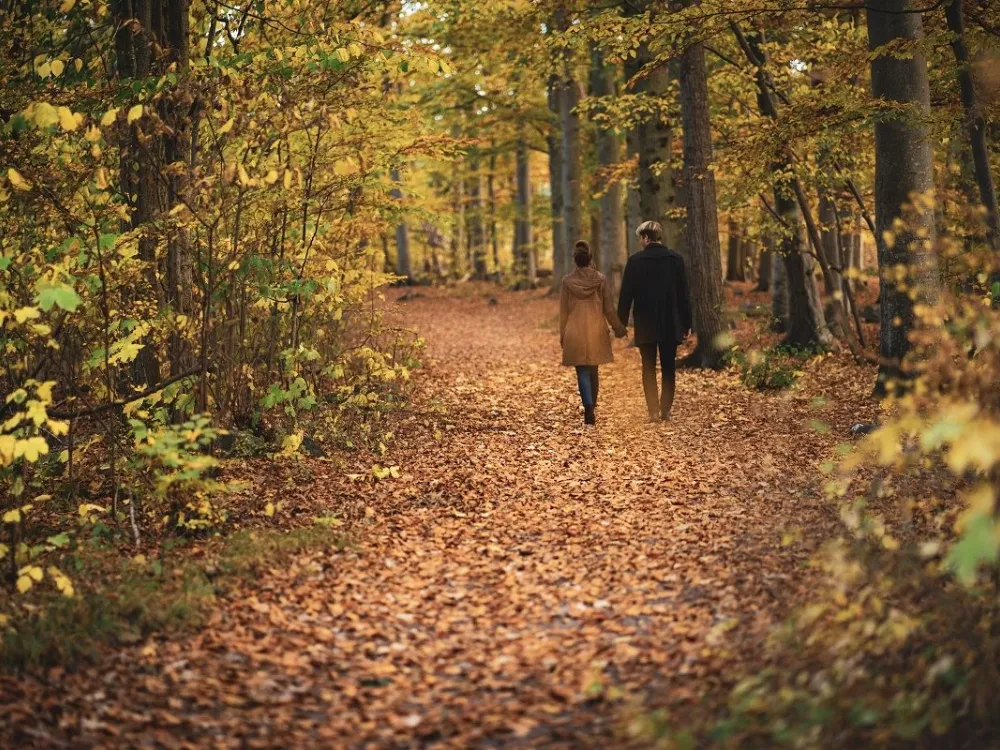
Today, the forest area consists mainly of older, herbaceous oak forests with clear elements of shrub vegetation, mainly hazel. Elm forest – which is an unusual type of forest with only a few occurrences in the county – is also found here. As long as Borgholm Castle was used as a defensive facility, there were open pastures with a few oaks and stands of hazel. When grazing ceased at the end of the 1800s, the area began to grow again into the forest we see today, with elements of hazel groves and dense shrub vegetation.
Abundant rare species
Older natural deciduous forests and swamp deciduous forests found here in Borga Hage are among the habitat types that have high conservation values. The occurrence of old, coarse trees is abundant. Many plant and animal species are completely dependent on this habitat type for their survival. More than a hundred rare species have been found here, such as forest barley, silver violet, false devil's mushroom, scaly gall mussel, long-legged frog, ribbed snail and elm beetle.
Nature for everyone
In order to preserve the area's high natural values, the deciduous forest will be allowed to develop freely while the grazing and haymaking areas will be kept open. The proximity to Borgholm Castle and Solliden means a high number of visitors during the summer. The area is also a popular outdoor area for Borgholm's urban area. Along the reserve's paths and roads, you can walk, cycle and jog. For example, on the Path of Health, a marked four-kilometre route that runs through the area.
Regulations
Within the nature reserve, it is not allowed to:
- Drive all types of motor vehicles within the land area.
- Drive a jet ski, hovercraft, hydrocopter or similar craft.
- Set up a motor vehicle, caravan or trailer.
- Camping.
- Bring an unleashed dog or other loose pet.
- Without consulting the County Administrative Board, put up a board, sign, placard, poster or similar device or make an inscription.
- Make a fire.
- Digging up, picking or damaging plants or plant parts with the exception of berries and edible mushrooms for domestic needs.
- Pick or damage wood fungi, mosses or lichens.
- Damage or remove growing or dead trees, stumps, bark, branches, shrubs, or twigs.
- Without consulting the County Administrative Board, carry out collection, investigation or research.
- Without the permission of the County Administrative Board, let or use the area for commercial use of the right of public access.
- Without the permission of the County Administrative Board, use the area for competition or practice purposes.
Source: Nature Management Unit, County Administrative Board of Kalmar County