
The history of Öland
The first time Öland is mentioned in a source is in Wulfstan's travelogue from the end of the 800s. In it, Öland ("Eowland") is depicted together with Blekinge Möre and Gotland as countries that belonged to the Swedes.
However, this has not prevented a historian from claiming that Öland did not become part of Sweden until the end of the 12th century. Before that, Öland would have been independent or perhaps have been subject to Denmark or some Wendish prince in present-day northern Germany. However, neither historical nor archaeological sources provide any support for these thoughts. Despite its location in the middle of the Baltic Sea, it is clearly the cultural influence of Svealand that has dominated Öland. That the island should have belonged to Denmark is also contradicted by the Danish historian Saxo Grammaticus, who around the year 1200 wrote an extensive and very patriotic work on his country's history.
The idea that Öland would have been independent in historical times is also not very likely. This island flourished already during the Iron Age thanks to its central location along the Baltic Sea's trade routes. But the prosperity and the central location also meant that Öland was very exposed to the extensive piracy that was the scourge of the Baltic Sea right up until the 13th century. A narrow and flat island like Öland offered the population very little protection and that is why this landscape has such a remarkably high concentration of ancient castles, of which Eketorp is the most famous. The Ölanders were thus among those who had a lot to gain from a strong royal power that could fight the pirates, and conversely, the strategically and economically important Öland should have been high up on the list of lands that a national founder would want to conquer.
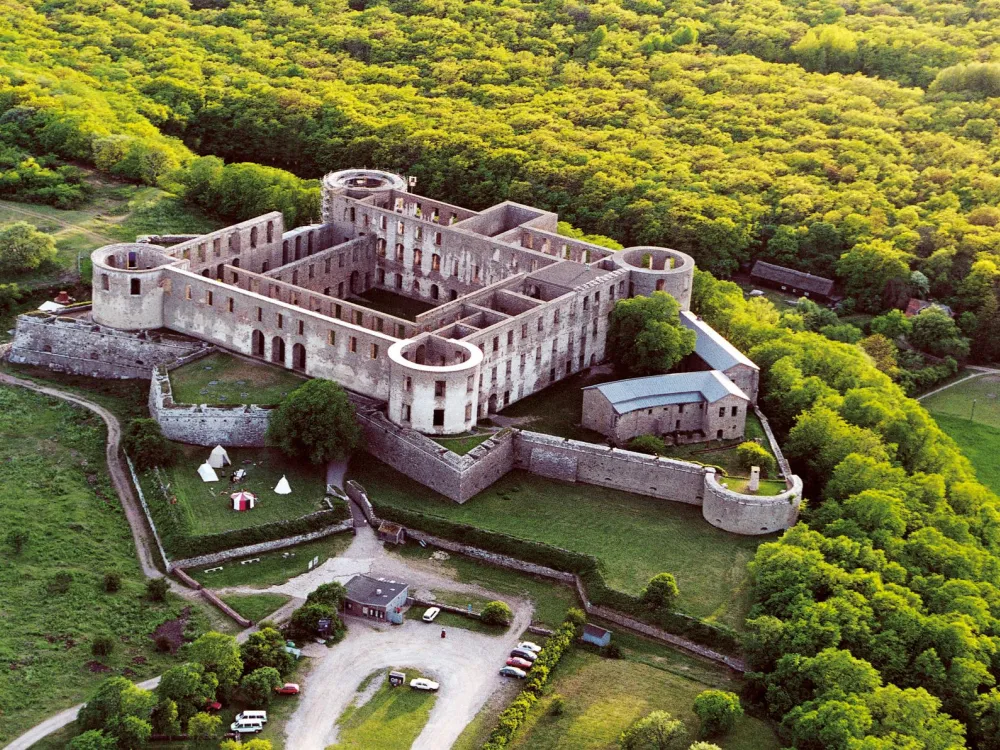
The main trading post on Öland was Köpingsvik, and its urban settlements that existed between the years 750 and 1250 have been compared to Birka. An inhibiting factor, however, was the lack of a deep harbor and after Kalmar had been founded on the other side of the strait at the end of the 12th century, Köpingsvik declined and it therefore never developed into a city. Near Köpingsvik, Borgholm Castle was built at the end of the 13th century, which during the Middle Ages was one of Sweden's most important castles. However, it would not be until 1816 before Borgholm became Öland's first and only town.
In connection with the Håtuna Games in 1306, Sweden was divided in 1310 between King Birger and his brothers, Dukes Erik and Valdemar. Öland fell to the dukes' lot and when they divided the lands between them in 1315, Valdemar got this province and located his residence at Borgholm. Until 1356, Öland was then the maintenance land of Valdemar's widow Ingeborg, who called herself "Duchess of Öland". Denmark's King Valdemar Atterdag conquered Öland and Gotland in 1361, but his bailiffs were killed by the commoners after his departure. During the 15th century's union battles, Öland with Borgholm Castle was the province that was controlled by the union kings for the longest time. Erik of Pomerania did not lose Öland until 1440. Even in modern times, Öland was a theatre of war and several naval battles were fought in its waters.
The 1800s was a more peaceful period characterized by a sharp increase in population. However, the agricultural crisis from the 1880s onwards meant a mass migration to America. Until 1930, 18,000 Ölanders emigrated and the population decreased from 38,000 to 27,000. The island's economy continued to stagnate even after the mass migration ended, which contributed greatly to the decision to build the Öland Bridge, which was inaugurated in 1972.