
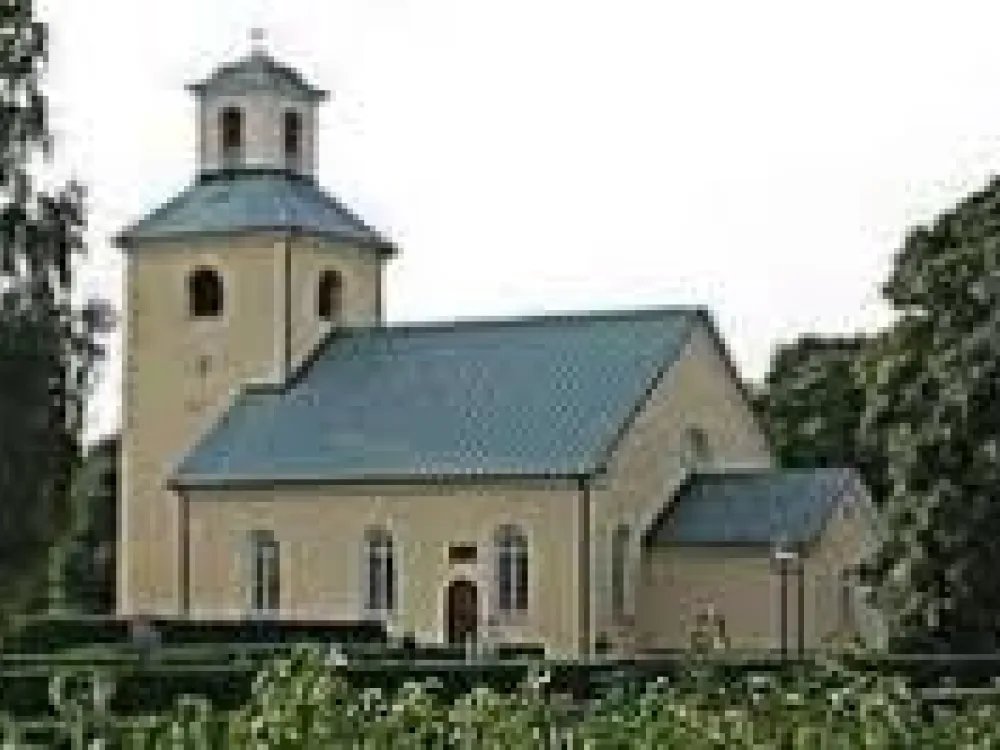
Böda Church
Böda church is our northernmost church and is part of the parish of Nordöland.
Böda parish is Öland's northernmost parish. The church and cemetery are located along road 136 on the west side of the road. The church site is located in the southern part of Böda, which is an elongated village.
North of the church is the vicarage, which was built in 1839. It has today been sold to private individuals. A further distance north of the church is the schoolhouse from 1849.
Church history
The church that was built in Böda during the second half of the 12th century had a small nave, narrower chancel and an extended, semi-circular apse to the east. During the troubled time for Öland at the end of the 12th century and the 13th century, the church was rebuilt into a defensive church. Among other things, the apse was demolished and the chancel was made as wide as the nave. Several changes were carried out in the following centuries.
By the mid-1700s, the population of the parish had increased so that the church was too cramped. Drawings for a new church were produced but had to be reworked. It was not until 1801-03 that the construction was carried out. To reduce costs, the western and southern walls of the medieval church were saved. The new church was built with a tower to the west, an almost square nave and a sacristy to the east. Since it was built, the church has undergone several restorations.
In 1942, the façade plaster was knocked down, which made it possible to examine the old walls and thus obtain several interesting information about the medieval church. Today, both interior and exterior, Böda church is characterized by classicist stylistic features, such as the round-arched windows, the bright church room and the design of the interior.
The Church